


What Emotional Healing Means

Updated: May 26
There are moments when emotional pain does not feel purely emotional. It lives in the chest, the jaw, the belly, the breath. It shows up as tension, numbness, irritation, exhaustion, or a quiet sense of disconnection. This is part of why a holistic approach to emotional healing matters. It recognizes that what we feel is not happening only in the mind. Our emotions are also lived through the body, the nervous system, our habits of attention, and the way we relate to ourselves and others.
In my work, I meet many people who have already tried to understand their feelings through reflection, conversation, or insight. Sometimes that helps. Sometimes it only takes them so far. A person can know why they feel overwhelmed and still remain stuck in the same inner pattern. This is often where a more whole-body approach becomes meaningful.
What holistic emotional healing includes
Holistic emotional healing is not a single method. It is a way of approaching emotional life that includes several dimensions of experience at once. Rather than separating mind from body, or emotions from energy, it invites us to listen more carefully to the full human system.
That can include emotional awareness, grounded presence, breath, movement, meditation, relational patterns, and energetic sensitivity. For some people, it also includes practices such as Qigong, Compassionate Communication, stillness, or simple forms of self-contact that help them notice what is happening without immediately resisting it.
The word holistic can sometimes sound vague, so I prefer to make it practical. If your sadness affects your breathing, your sleep, your posture, and the way you speak to your partner, then healing may need to involve more than talking about sadness. If stress leaves your body armored and your attention scattered, then emotional support may need to include nervous system regulation, movement, and learning how to stay present with yourself in a gentler way.
Why emotional healing is not only about insight
Insight has value. It can bring clarity, language, and self-understanding. But insight alone does not always create change. Many emotional patterns become embodied over time. They live in reflexes, contractions, avoidance, over-efforting, and learned forms of protection.
You may notice this when you understand that you do not need to please everyone, yet your body still tightens the moment conflict appears. Or when you know you are safe, but your breath becomes shallow as soon as a difficult feeling rises. These moments are not failures. They simply show that healing often asks for more than mental understanding.
A holistic approach works with this reality rather than against it. It allows healing to become experiential rather than purely conceptual. Instead of asking only, What do I think about this feeling, it also asks, What happens in my body when this feeling arises? What changes when I slow down? What softens when I stop fighting my own experience?
The role of the body in holistic emotional healing
The body often tells the truth before the mind can organize it. A lump in the throat, pressure in the chest, collapsed posture, restless legs, clenched hands - these are not random. They can be part of the emotional language we were never taught to read.
When we begin listening to the body with patience, emotional healing becomes more grounded. This does not mean every sensation has a simple meaning. It means the body can become a doorway into honesty, self-contact, and regulation.
This is one reason I often work with practices that include movement and stillness together. Qigong, for example, can support emotional awareness without forcing expression. Gentle movement, breath, and attention can help a person notice where they are holding, pushing, or leaving themselves. Over time, this may create a little more space around an experience that once felt overwhelming.
That space matters. Not because it removes all pain, but because it can make pain more workable. A person may start to feel, I am still with myself here. I do not have to abandon my body when emotion arises.
Qigong and emotional balance
Qigong offers a simple but profound principle - the body and mind influence each other, and both are shaped by the quality of our attention. When we move with presence rather than force, something often begins to reorganize. Breath deepens. Internal pressure eases. Awareness becomes less fragmented.
I do not see Qigong as a performance or a technique for overriding emotion. I see it as a practice of relationship. You are learning how to be in contact with yourself in a steadier way. Sometimes that contact brings calm. Sometimes it brings grief, tenderness, anger, or fatigue that had been held beneath the surface. The practice is not about producing the right state. It is about becoming available to what is actually here.
This is where Taoist wisdom can be quietly helpful. Instead of trying to dominate our inner life, we learn to meet it with a little more humility. Effort still has a place, but not the kind that hardens the system. More often, the healing movement is subtle. It comes through allowing, listening, and sensing when to soften and when to stay present.
Emotional healing and the nervous system
Many people seeking emotional healing are carrying chronic internal strain. They may not always describe it that way. They may say they feel tired, reactive, disconnected, or unable to settle. Often the nervous system has spent a long time bracing.
A holistic approach can support emotional healing by helping the body experience enough safety to soften that bracing, little by little. This is not a quick process, and it rarely happens through pressure. Pushing yourself to relax usually does not work. Being accompanied into a slower, more honest contact with your experience can be much more supportive.
Breath awareness, grounded movement, meditation, and compassionate self-observation can all play a role here. So can the simple practice of reducing internal violence - noticing where you demand, shame, rush, or override yourself. For some people, this shift alone changes the quality of their inner life considerably.
Relationships are part of the healing field
Emotional healing does not happen in isolation. Many of our emotional patterns are shaped in relationship, and many of them become visible there as well. The way we protect ourselves, reach for closeness, avoid vulnerability, or misread each other often has deep roots in the body and nervous system.
This is why conscious communication can be such an important part of holistic emotional healing. Not because there is a perfect way to communicate, but because language can either deepen connection or increase inner contraction. When we learn to speak from real feeling and need, without blame or performance, we begin to create a different emotional environment.
For couples especially, this work can become deeply embodied. Relational harmony is not only about saying the right thing. It also involves pacing, presence, energetic sensitivity, and the ability to remain connected when emotions move. Sometimes the most meaningful shift is not solving a conflict but staying human inside it.
What holistic emotional healing is not
It is not about becoming endlessly calm, spiritually pure, or emotionally impressive. It is not about getting rid of every difficult feeling. And it is not about replacing practical support, therapy, or medical care when those are needed.
It is also not one-size-fits-all. Some people need more movement. Others need more stillness. Some benefit from gentle structure. Others need less technique and more permission to feel. There are seasons when insight leads, and seasons when the body needs to lead.
This is why I value a grounded and responsive approach. Healing tends to unfold when we stop trying to force a universal method onto a very individual experience.
Beginning your own holistic emotional healing practice
If you want to begin simply, start by noticing where your emotions live in the body. Not analyzing at first, just noticing. What happens to your breath when you feel pressure? What happens to your shoulders when you feel hurt? Can you stay present for ten seconds longer than usual without fixing anything?
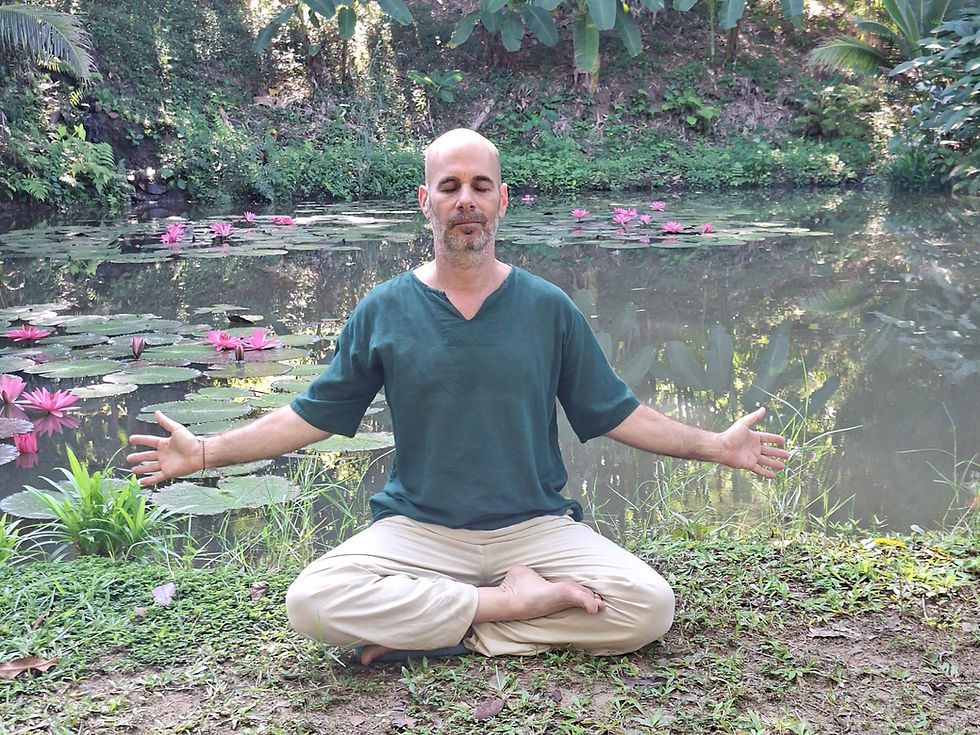
You might also explore a short daily practice that brings together movement, breath, and awareness. A few minutes of Qigong, quiet standing, seated meditation, or slow attentive walking can be enough to shift the quality of your inner contact. The point is not intensity, but consistency and honest contact with yourself.
If communication is part of the struggle, it can help to slow down your language. Instead of explaining your story immediately, try naming what you actually feel and what matters to you underneath it. This can be surprisingly vulnerable, but also clarifying.
And if your experience feels tangled or hard to meet alone, receiving grounded support can make a real difference. Not because someone else has the answer to your life, but because healing often deepens in the presence of attuned support.
Holistic emotional healing asks for patience, honesty, and a willingness to come back into relationship with yourself. Not perfectly. Just more gently, more regularly, and with a little more trust in what becomes possible when body, emotion, mind, and energy are allowed back into relationship with one another.



Comments