


What Is Qigong Healing, Really?

Updated: May 26
Some people come to Qigong because their body feels tight, tired, or overworked. Others arrive because stress never fully leaves, emotions feel stuck, or life has started to feel strangely disconnected. If you have been wondering what is qigong healing, the simplest answer is this: it is a practice of restoring relationship within yourself - between body, breath, mind, emotions, and energy.
Qigong healing is not one single technique. It is a broad field of practice rooted in Chinese healing traditions and Taoist understanding. It often includes gentle movement, posture, brQigong healing hugging tree posture near Tulsi, Kerala, Indiaeath awareness, meditation, and subtle attention to the body’s energy. In some contexts it also includes hands-on or energetic healing offered by a practitioner. But at its heart, Qigong healing is about learning how to sense, regulate, and nourish your internal life rather than only pushing through it.
That matters because many people are not simply dealing with physical symptoms. They are also carrying emotional strain, nervous system dysregulation, chronic contraction, and a deep habit of living in the head while feeling cut off from the body. Qigong offers a different direction. It helps you slow down enough to feel what is happening, soften what is rigid, and support vitality from the inside out.
Often, people do not realize how much tension they are carrying until they slow down enough to feel their jaw, chest, belly, or breathing directly. That simple awareness can already begin changing the relationship between the body, emotions, and nervous system.
What is qigong healing in practice?
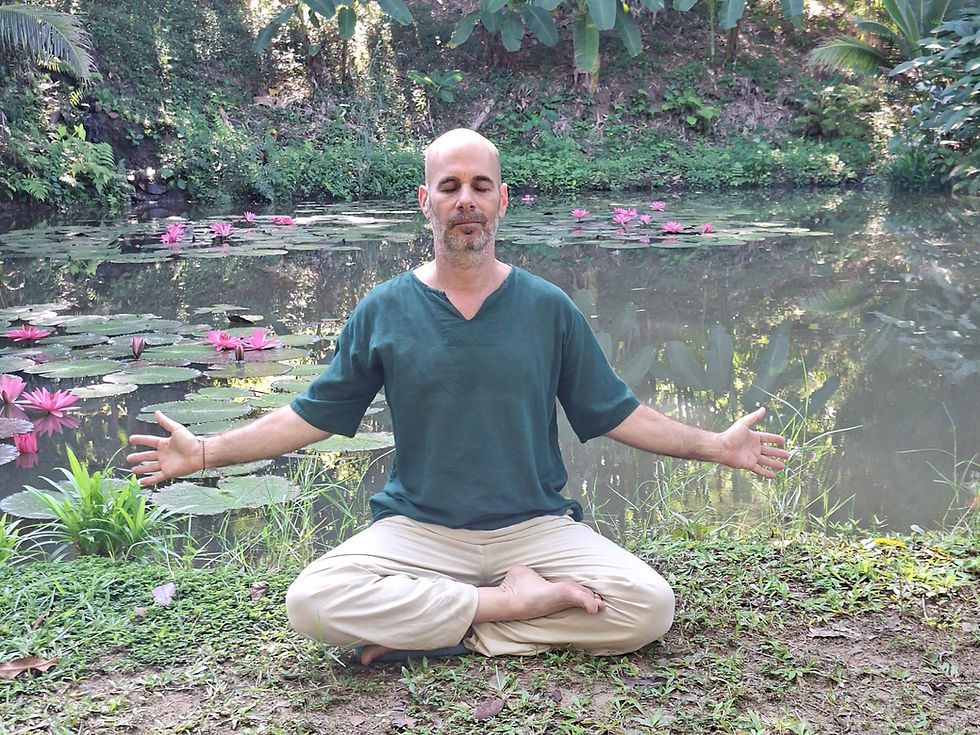
In practice, Qigong healing can look very simple. A person stands with knees soft, breathes naturally, and makes slow, intentional movements. Another person may sit in stillness and place awareness in the lower belly, noticing warmth, breath, or subtle sensation. In a healing session, someone may receive quiet energetic support while resting, allowing the body and mind to settle into a more coherent state.
From the outside, this can appear gentle, even understated. But internally, a great deal may be happening. Attention begins to gather. Breath becomes less strained. The jaw softens. The chest opens a little. Thoughts lose some of their urgency. Emotions that were being held under tension may begin to move. For many people, this is where healing begins - not through force, but through contact.
In Qigong healing, change often happens not through forcing the body, but through creating the conditions for the body to soften and reorganize itself naturally.
Qigong is based on the understanding that qi, often translated as life energy, moves through the body and influences vitality, balance, and wellbeing. When that flow is constrained, a person may feel depleted, agitated, numb, tense, or unwell. When it moves more harmoniously, there is often greater ease, clarity, groundedness, and resilience.
This does not need to be turned into a dramatic mystical claim. Many people understand Qigong through direct experience long before they have language for qi. They simply notice that after practicing, they feel more present, less contracted, and more alive in their own body.
For some people, energy is experienced very concretely: warmth in the hands, tingling, emotional movement, changes in breathing, relaxation, or a greater sense of internal aliveness and connection.

How Qigong healing supports the body and emotions
One reason Qigong can feel so meaningful is that it does not separate physical healing from emotional healing. The body holds our history. Stress changes breath. Fear tightens the belly and chest. Grief can collapse posture and energy. Chronic emotional suppression often appears as muscular holding, fatigue, agitation, or pain.
Qigong works with this interconnectedness rather than trying to isolate one part from another. Gentle movement can release tension patterns that words alone do not reach. Breath awareness can calm an overstimulated nervous system. Stillness practices can help a person notice feelings before they become overwhelming. Over time, this creates more internal space.
For some, the first change is physical. Sleep improves. Shoulders drop. Pain softens. Energy returns. For others, the shift is emotional. They notice less reactivity, more capacity to stay present, and a more compassionate relationship with themselves. Often these changes happen together.
This is part of why Qigong is so supportive for people living with stress, burnout, chronic pain, or inner imbalance. It does not ask you to transcend the body. It invites you back into it, gently enough that healing becomes possible.
Qigong and nervous system regulation
Modern language often speaks about regulation, and for good reason. Many people are living in cycles of overactivation, shutdown, or subtle survival stress. Qigong can support nervous system regulation because it combines slowness, breath, awareness, posture, and rhythm. These are all pathways that help the body register safety.
But this is not always immediate. Sometimes slowing down brings awareness to discomfort that was previously hidden by busyness. That does not mean the practice is failing. It may mean the body is finally safe enough to reveal what has been waiting underneath. In a grounded setting, this can be part of healing.
Qigong and chronic pain
Qigong is not a guaranteed cure for chronic pain, and it should not be framed that way. Pain is complex. It may involve injury, inflammation, trauma, stress, structural patterns, and nervous system sensitization. Still, Qigong can be deeply supportive because it improves body awareness, reduces unnecessary tension, supports circulation, and helps people relate to pain with less fear and bracing.
For many, this changes the whole experience. The body no longer feels like an enemy. There is more listening, more responsiveness, and less pushing. Sometimes pain decreases directly. Sometimes the most important shift is that a person feels more resourced and less trapped by their symptoms.
What Qigong healing is not
It helps to be clear here. Qigong healing is not about performing perfect movements or chasing special experiences. It is not a quick fix, and it is not meant to replace medical care when medical care is needed. It is also not only about relaxation, even though relaxation may be one result.
At times, Qigong is quiet and nourishing. At other times, it can bring you into contact with held grief, restlessness, anger, or vulnerability. Real healing is not always soothing in the short term. Sometimes it asks for honesty, patience, and a willingness to feel what has been avoided.
This is why guidance can matter. A grounded teacher or practitioner can help you work in a way that is paced, embodied, and supportive rather than overwhelming.
What is qigong healing compared with other practices?
People often ask how Qigong differs from yoga, meditation, breathwork, or energy healing. There is overlap, but the feeling is distinct. Qigong is usually softer than exercise-driven movement practices and more embodied than purely seated meditation. It includes awareness of energy, but it is often very practical in how that awareness is cultivated through posture, breath, and sensation.
Compared with intense cathartic methods, Qigong tends to work more gradually. That can seem subtle at first, especially if someone is used to dramatic release. But subtle does not mean weak. Slow, consistent regulation often creates deeper change than occasional peaks of intensity.
Compared with receiving-only healing modalities, Qigong also asks for participation. Even in stillness, there is cultivation. You are learning to inhabit yourself differently. That active relationship is part of what makes the practice sustainable.
Who is Qigong healing for?
Qigong healing can support many kinds of people, but it is especially resonant for those who are tired of approaches that treat symptoms while ignoring the whole person. If you sense that your emotional life affects your energy, your stress affects your body, or your relationships affect your sense of vitality, Qigong makes intuitive sense.
It can be helpful for beginners, older adults, highly sensitive people, those recovering from burnout, and people who feel intimidated by more demanding physical systems. Because the practice can be adapted, it often meets people where they are.
That said, it is not one-size-fits-all. Some people need trauma-sensitive pacing. Some need stronger structure. Some want spiritual language, while others prefer a grounded body-based frame. A good Qigong healing space respects that healing is personal.
How to begin without overcomplicating it
If you feel drawn to Qigong healing, begin simply. You do not need to understand every theory before you start. The real understanding comes through practice.
Start by noticing your breath without trying to control it. Stand or sit and feel the weight of your body. Let your shoulders soften. Move slowly, even if the movement is small. Pay attention to warmth, tingling, heaviness, release, resistance, or emotion. These are not distractions from the practice. They are part of it.
Consistency matters more than intensity. Ten minutes of sincere practice done regularly can be more transformative than occasional ambitious sessions. Over time, the practice begins to shape how you walk, listen, breathe, respond, and relate.
Healing in this sense is not about becoming someone else. It is about becoming more available to your own life. More present in your body. More honest with your emotions. More connected to the quiet intelligence that emerges when striving softens.
If Qigong healing calls to you, you do not have to force certainty before taking a first step. Sometimes the body knows before the mind does, and that knowing is worth listening to.


Comments